Why Ventilation Matters in Kitchens
Cooking releases a cocktail of byproducts into the air:
-
Grease particles that cling to surfaces
-
Smoke and odors that linger long after a meal
-
Moisture that fuels mold growth
-
Heat that can overwhelm HVAC systems
A vent hood serves as the first line of defense. It captures airborne pollutants and directs them outside or through specialized filters. But here’s the catch: if the hood isn’t sized or balanced properly, it can disrupt the delicate pressure balance of your HVAC kitchen system.
Imagine turning on a high-powered vent hood that pulls out 1,200 cubic feet of air per minute (CFM). Unless the HVAC system or makeup air system replenishes that air, your kitchen may experience:
-
Negative pressure, making doors hard to open
-
Backdrafting from gas appliances
-
Reduced energy efficiency as HVAC struggles to stabilize
The Vent Hood & HVAC Balancing Act
Vent hoods don’t operate in isolation—they directly affect HVAC performance. Think of your kitchen like a set of lungs: the hood is the exhale, while the HVAC or makeup air system is the inhale. Both need to work together for balance.
Here’s how the two interact:
-
Airflow Coordination: A powerful vent hood without matching intake creates suction problems.
-
Temperature Regulation: HVAC systems compensate for the hot air vented outside by cooling incoming replacement air.
-
Indoor Air Quality: Air filters, especially with the right MERV rating, catch fine particulates before they circulate back indoors.
In commercial kitchens, building codes often require a dedicated makeup air system that introduces conditioned air equal to what’s exhausted. For residential kitchens, homeowners often overlook this step, but even a well-designed range hood benefits from supplemental airflow.
Sizing Guidelines for Vent Hoods
When it comes to vent hoods, size really does matter. Oversized or undersized hoods can throw the entire HVAC system off balance.
General guidelines for proper sizing:
-
Width: The hood should cover the entire cooktop surface, ideally extending 3 inches beyond on each side for gas ranges.
-
CFM (Cubic Feet per Minute):
-
Gas stoves: 100 CFM per 10,000 BTU of burner output.
-
Electric stoves: 100 CFM per linear foot of cooktop.
-
-
Mounting Height:
-
Wall-mounted hoods: 24–30 inches above the cooking surface.
-
Island hoods: 30–36 inches above the cooktop.
-
Too much CFM without makeup air can cause negative pressure. Too little, and grease and smoke linger in your kitchen.
The Role of MERV Ratings in Kitchen Ventilation
While vent hoods are the star players, air filters are the unsung heroes. That’s where MERV ratings come in.
-
What is MERV?
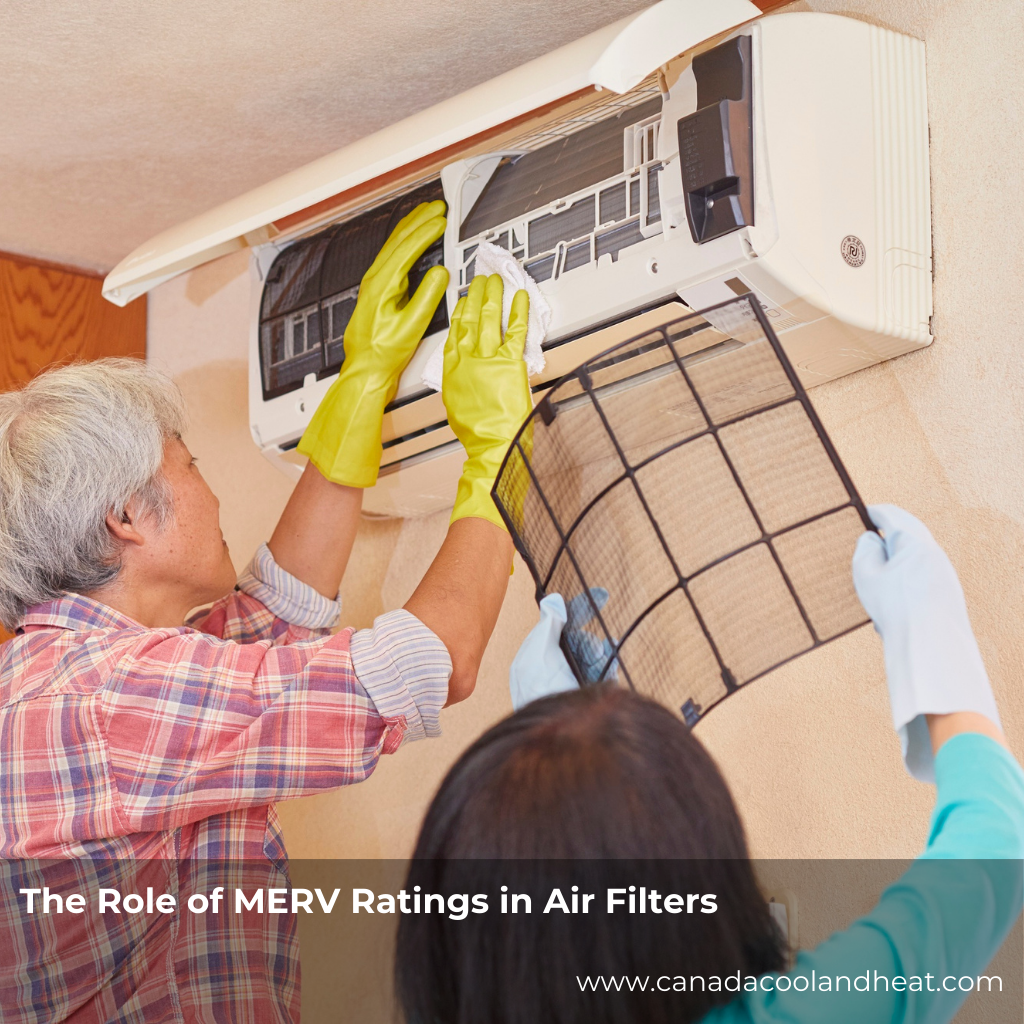
MERV (Minimum Efficiency Reporting Value) measures how effectively a filter traps particles. Ratings range from 1 (basic dust filtering) to 16 (hospital-grade filtration). -
In Kitchens:
A filter with a MERV rating between 8 and 13 is often recommended. It captures fine grease particles, smoke, and allergens without overly restricting airflow. -
Balance is Key:
Higher isn’t always better. Using a filter that’s too restrictive can strain the HVAC blower, especially in older systems. The sweet spot depends on your HVAC capacity and kitchen’s cooking demands.
Think of MERV ratings like choosing the right colander: too coarse, and particles slip through; too fine, and water (or airflow) struggles to pass.
Practical Tips for Homeowners & Restaurateurs
-
Schedule regular hood cleaning to prevent grease buildup.
-
Match your hood CFM to your cooktop’s BTU output.
-
Ensure your HVAC has makeup air integration if the vent hood exceeds 400 CFM.
-
Replace filters every 1–3 months, especially in heavy-use kitchens.
-
Consult HVAC pros when upgrading equipment—they’ll help balance the system.
Conclusion
Kitchens are the heart of the home (or restaurant), but they’re also one of the trickiest spaces to ventilate. Vent hoods protect against smoke and grease, HVAC systems keep air balanced, and MERV-rated filters ensure clean, breathable air.
Get the sizing right, balance the airflow, and choose filters wisely—and your kitchen will run like a well-tuned recipe.
👉 Ready to optimize your kitchen’s ventilation? Start with your range hood size, then work with an HVAC professional to ensure balance and filter performance.
FAQs
1. What’s the best MERV rating for kitchen use?
MERV 8–13 works best. It balances fine particle capture without overloading your HVAC system.
2. Do residential kitchens really need makeup air?
If your hood exceeds 400 CFM, yes—otherwise, you risk negative pressure and poor HVAC balance.
3. How often should vent hood filters be cleaned or replaced?
Metal grease filters should be cleaned monthly. Charcoal or disposable filters need replacement every 1–3 months.
4. Can a vent hood be too powerful?
Yes. Oversized hoods can waste energy and cause airflow issues. Proper sizing is crucial.
5. What’s the difference between ducted and ductless hoods?
Ducted hoods expel air outdoors, while ductless recirculate it through filters. Ducted is more effective for heavy cooking.
6. How does cooking style affect hood sizing?
Frying and high-heat cooking produce more smoke and grease, requiring higher CFM and better filtration than light boiling or steaming.
7. Are higher MERV filters always better?
Not necessarily. Filters above MERV 13 can restrict airflow unless your HVAC is designed to handle them.
8. What happens if HVAC airflow isn’t balanced?
You may experience drafts, backdrafting from gas appliances, or uneven heating and cooling.
9. Do commercial kitchens follow the same rules?
Yes, but on a larger scale. Codes require makeup air systems and higher CFM due to continuous heavy-duty cooking.
10. Can I install a vent hood myself?
DIY installation is possible for smaller systems, but professional installation ensures proper sizing, ductwork, and HVAC balance.