
The Heart of Kitchen Airflow: Understanding Vent Hood HVAC Kitchens
Think of your kitchen vent hood as the lungs of your home. Every time you cook — whether it’s a quick breakfast or a full Sunday dinner — moisture, grease, and heat fill the air. Without an effective vent hood HVAC kitchen setup, all that warm, humid air lingers, forcing your HVAC system to work harder to cool or heat your home.
A vent hood’s job is to remove this contaminated air and replace it with fresh air from outside or adjacent rooms. However, if your hood is too powerful or poorly balanced, it can create negative air pressure, pulling conditioned air out of your home and letting unconditioned air sneak in through cracks and vents.
That imbalance means your HVAC system has to compensate — running longer, using more energy, and costing you more on your utility bills.
How Smart Thermostats Join the Conversation
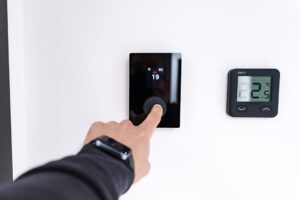
Now, let’s bring in the smart thermostat — your home’s energy strategist.
Unlike traditional thermostats, a smart thermostat doesn’t just control temperature; it learns your habits, monitors humidity, and can even detect when ventilation systems are creating airflow imbalances.
Here’s how it helps:
-
Learning Patterns: A smart thermostat tracks when you’re home and adjusts heating or cooling accordingly. If you usually cook dinner at 6 PM, it can anticipate that spike in temperature from your vent hood and make small adjustments to keep your home comfortable.
-
Air Quality Insights: Some smart thermostats sync with HVAC sensors to monitor indoor air quality. If your kitchen ventilation isn’t keeping up, it can alert you or increase system airflow temporarily.
-
Energy Efficiency Reports: Over time, it provides feedback on how your ventilation and HVAC systems interact — helping you spot inefficiencies before they hit your wallet.
Together, your vent hood and smart thermostat create a dialogue between energy use and comfort, making your home smarter and your bills smaller.
Sizing Your Range Hood the Right Way
One of the most common mistakes homeowners make is installing the wrong-sized hood for their kitchen. A hood that’s too small won’t clear the air; one that’s too big can cause negative pressure and imbalance your HVAC system.
Here’s a quick sizing guide:
| Cooktop Type | Recommended Hood Size | CFM (Cubic Feet per Minute) |
|---|---|---|
| Electric Range | Hood should be equal width to range | 100 CFM per linear foot |
| Gas Range | Hood should extend 3” beyond range on each side | 100–150 CFM per 10,000 BTU |
| Outdoor Grill | 6” wider than grill on each side | 1,000–1,200 CFM total |
Pro Tip: If your hood’s CFM rating exceeds 400, most building codes require a make-up air system — a small vent that introduces outside air to replace what’s exhausted. Without it, your HVAC system struggles to maintain pressure balance, leading to drafts and energy waste.
The Chain Reaction of Poor Ventilation
When your kitchen ventilation isn’t properly sized or balanced, it affects far more than your cooking experience:
-
Temperature Swings: Conditioned air gets pulled out faster than replaced, confusing your thermostat.
-
Humidity Buildup: Steam and grease stay trapped, putting extra strain on your HVAC’s dehumidifier.
-
Increased Energy Costs: Your system cycles more often, consuming more electricity or gas.
-
Reduced Comfort: Drafts and uneven temperatures make rooms feel too hot or too cold.
A smart thermostat can mitigate some of these issues by adjusting system behavior dynamically, but good ventilation design is the foundation.
Bringing It All Together: The Balanced Home
Imagine this: you start cooking a big meal on a summer evening. Your vent hood kicks in, quietly whisking away steam and smoke. Your smart thermostat senses a slight uptick in temperature and humidity, then adjusts your AC output just enough to maintain comfort — without wasting energy.
That’s the beauty of a well-synced vent hood HVAC kitchen.
It’s not just about air removal — it’s about harmony between technology and environment.
Conclusion: Breathing Easier, Saving Smarter
Your home is a living system. When every component — from your vent hood to your smart thermostat — works in sync, you enjoy cleaner air, consistent comfort, and lower energy bills.
So next time you’re standing in your kitchen, stirring a pot or flipping a pancake, remember: that quiet hum overhead isn’t just venting air. It’s part of a carefully tuned performance that keeps your entire home running efficiently.
A smarter kitchen means a smarter home — and more savings in your pocket.
FAQs About Vent Hood HVAC Kitchens
1. How does a range hood affect my HVAC system?
A range hood removes indoor air, which can alter home pressure. If it’s too strong or unbalanced, your HVAC system must work harder to maintain temperature and airflow.
2. What’s the ideal CFM for a kitchen hood?
For electric ranges, about 100 CFM per foot of cooktop; for gas, 100–150 CFM per 10,000 BTU.
3. Do I really need a make-up air system?
Yes, if your hood exceeds 400 CFM. It helps balance pressure and keeps your HVAC system from overworking.
4. Can a smart thermostat detect poor ventilation?
Many models can monitor humidity and temperature spikes, indirectly signaling poor airflow or inefficient venting.
5. Will better ventilation reduce my energy bills?
Absolutely. Balanced airflow reduces HVAC strain, resulting in lower utility costs and better comfort.
6. Should my vent hood run during winter?
Yes, but for shorter durations. It removes moisture and cooking fumes that can otherwise affect indoor air quality.
7. Can I retrofit a smart thermostat into an older HVAC system?
In most cases, yes. As long as your system has compatible wiring, a professional can install and configure it easily.
8. How often should I clean my range hood filters?
At least once a month for heavy cooking, or every three months for lighter use. Clean filters ensure proper airflow.
9. Do vent hoods help with kitchen odors?
Definitely — a properly vented hood removes not just smoke but also lingering food smells and excess moisture.
10. What’s the biggest mistake homeowners make with kitchen ventilation?
Installing a high-powered hood without a make-up air system, causing HVAC imbalance and wasted energy.