Why Proper Kitchen Ventilation Matters
Cooking releases more than just aromas. Each time you sauté, fry, or boil, you release:
-
Moisture – leading to condensation and potential mold growth.
-
Particles – grease and oils that cling to cabinets and walls.
-
Combustion byproducts – like carbon monoxide from gas burners.
Without good ventilation, these pollutants stay trapped indoors. This doesn’t just make your kitchen uncomfortable—it can affect indoor air quality throughout the home.
How Range Hoods Affect HVAC Balance
Here’s the part most homeowners don’t realize: vent hoods pull a lot of air.
-
A typical residential hood can exhaust 100–600 cubic feet per minute (CFM).
-
Commercial-style hoods may exceed 1,000 CFM.
That’s like opening a window and letting conditioned air (heating or cooling) flow right outside. The HVAC system then has to work harder to replace it, which can:
-
Disrupt pressure balance – leading to drafts, doors slamming shut, or even pulling outdoor air through cracks.
-
Increase energy bills – since heated or cooled air is lost.
-
Create backdraft risks – pulling combustion gases back into the home from fireplaces or water heaters.
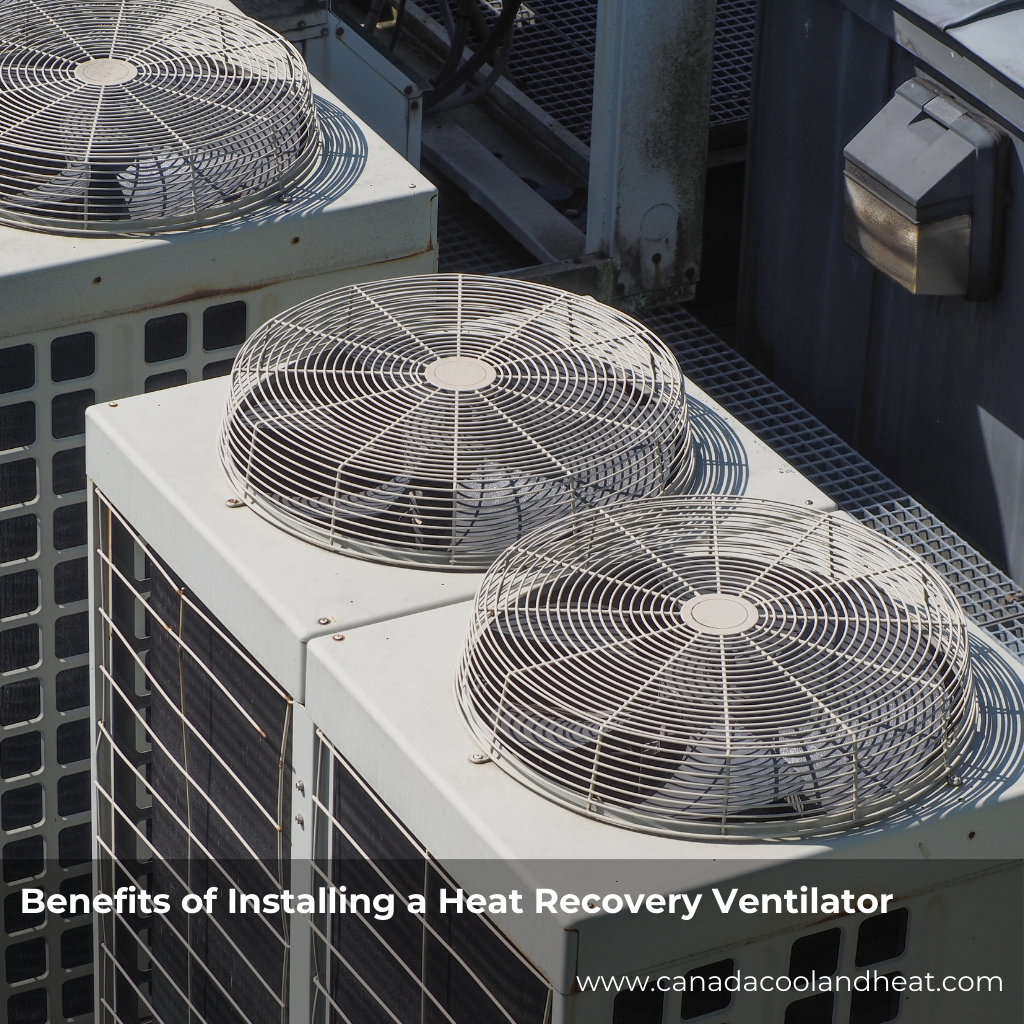
This is where HRVs shine—they replace exhausted air with fresh air while recovering up to 70–80% of the energy from the outgoing stream.
The Role of Heat Recovery Ventilators (HRVs) in Kitchens
HRVs don’t replace your range hood, but they work alongside it.
Think of it like a balance:
-
The hood pulls dirty, greasy air out.
-
The HRV brings in fresh, filtered outdoor air while saving the heat or coolness from what’s leaving.
Benefits include:
-
Cleaner indoor air with fewer cooking odors.
-
Improved comfort by balancing pressure indoors.
-
Lower energy use because recovered heat reduces HVAC strain.
-
Healthier living space thanks to a steady supply of oxygen-rich air.
Sizing Guidelines for Range Hoods & HRVs
Range Hood Sizing
To size a vent hood properly, you’ll need to consider both kitchen size and stove type:
-
Electric cooktops: 100 CFM per 10″ of stove width.
-
Gas ranges: 100 CFM per 10,000 BTU of burner output.
-
General rule: Most homes need between 250–600 CFM.
Pro tip: Oversizing a hood isn’t always better—it can over-exhaust and worsen HVAC imbalances.
HRV Sizing
An HRV should be sized to match the home’s ventilation needs. A common guideline is:
-
1 CFM per 100 sq. ft. of living space.
-
Add extra for high-use kitchens (20–40 CFM continuous).
Your HVAC contractor can balance the HRV with the hood so that when the hood exhausts, the HRV offsets it with tempered supply air.
A Story from the Field
One homeowner had a gorgeous new kitchen with a 1,200 CFM professional hood. After installation, they noticed cold drafts in winter and higher heating bills. Doors slammed shut randomly, and the fireplace smoked inside.
The solution? Installing an HRV designed to balance the hood’s airflow. Suddenly, the kitchen smelled fresher, drafts disappeared, and the family’s energy bills leveled out. It was a win-win: powerful cooking ventilation and a comfortable home.
Conclusion
Proper kitchen ventilation isn’t just about whisking away cooking smells—it’s about protecting your home’s air quality and keeping your HVAC system in balance.
By combining the right range hood sizing with a Heat Recovery Ventilator, you can:
-
Cook freely without lingering odors.
-
Maintain comfortable indoor temperatures.
-
Keep energy bills in check.
Thinking about upgrading your ventilation system? Talk to a trusted HVAC professional to design a balanced setup that fits your kitchen and your home.
FAQs
1. Do I need a vent hood if I have an HRV?
Yes. HRVs provide fresh air but don’t capture grease and cooking fumes like a hood does. Both work together.
2. Can I use a recirculating hood instead?
Recirculating hoods filter some grease but don’t remove moisture or combustion gases. A vented hood plus HRV is the best solution.
3. How often should I clean my hood filter?
Most filters should be cleaned every 1–3 months depending on cooking frequency.
4. Do HRVs work in all climates?
Yes, though in humid climates, an Energy Recovery Ventilator (ERV) may be better since it manages moisture more effectively.
5. What happens if my hood is oversized?
Too much exhaust can cause pressure issues, energy waste, and backdrafting. Balance is key.
6. How long does an HRV last?
With proper maintenance, most HRVs last 10–15 years.
7. Can an HRV improve overall indoor air quality?
Absolutely. Beyond cooking, it reduces stale air, allergens, and pollutants from daily living.
8. Should HRVs run continuously?
Yes, most are designed to run 24/7 at a low speed, with boost modes during cooking.