Signs of Mold in Air Ducts
Before you start cleaning, it’s important to confirm that mold is present in your air ducts. Here are some common signs:
- Musty Odors: A persistent, moldy smell coming from your vents.
- Visible Mold Growth: Black, green, or white spots inside the ducts or around vents.
- Increased Allergies or Respiratory Issues: Mold spores can trigger asthma, congestion, and other health problems.
- Excess Moisture: If your HVAC system has condensation or water leaks, mold growth is more likely.
- Poor Airflow: Mold can clog air filters and ducts, reducing airflow efficiency.
If you suspect mold but are unsure, consider testing your indoor air quality with a mold detection kit or consulting an HVAC professional.
Safety Precautions Before Cleaning Mold
Cleaning mold requires proper safety measures to protect yourself and prevent further contamination.
Wear Protective Gear
- Gloves: Use non-porous gloves (rubber, nitrile, or latex) to prevent skin contact.
- Face Mask: A high-quality N95 respirator helps protect against mold spores.
- Goggles: Safety goggles prevent mold spores from irritating your eyes.
- Long-Sleeved Clothing: Wear old clothing that can be washed immediately after cleaning.
Turn Off the HVAC System
To prevent the spread of mold spores, turn off your heating, ventilation, and air conditioning (HVAC) system before cleaning.
Contain the Area
Seal off nearby vents and doors with plastic sheets to keep mold spores from spreading.
Ensure Proper Ventilation
Open windows and use a fan to direct spores outside while cleaning.
Step-by-Step Guide to Cleaning Mold from Air Ducts
1. Inspect and Remove Vent Covers
- Use a screwdriver to remove vent covers and inspect for mold.
- Clean vent covers with warm soapy water and let them dry completely.
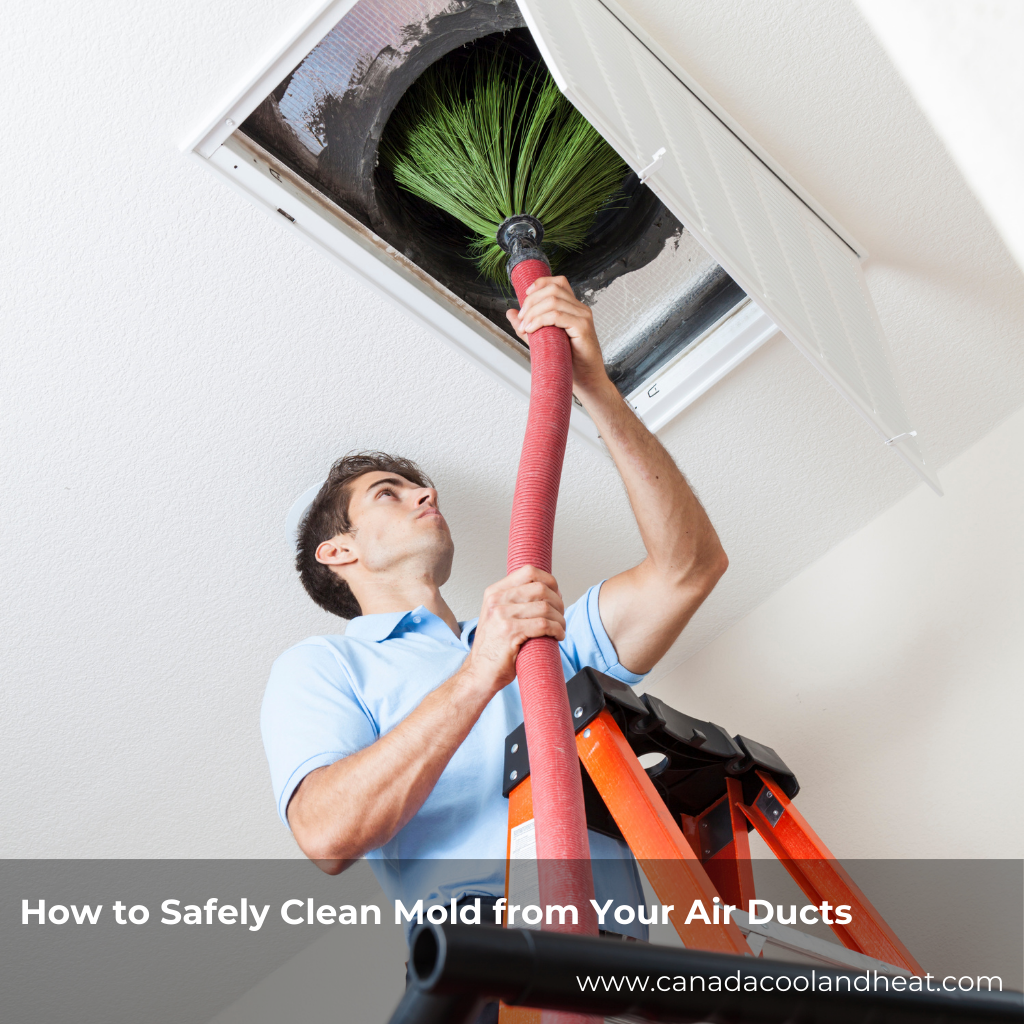
2. Vacuum the Ducts
- Use a HEPA vacuum cleaner to remove loose mold, dust, and debris.
- Make sure the vacuum has a long hose to reach deep into the ducts.
3. Apply a Mold Cleaner
Choose an EPA-approved mold cleaner or prepare a DIY solution:
- White Vinegar: Pour undiluted white vinegar into a spray bottle and apply it to moldy areas.
- Hydrogen Peroxide (3%): Spray onto the mold and let it sit for 10 minutes before scrubbing.
- Baking Soda Solution: Mix one tablespoon of baking soda with a cup of water and spray.
- Commercial Mold Cleaners: Look for non-toxic, HVAC-safe solutions available in stores.
4. Scrub the Affected Areas
- Use a soft brush or microfiber cloth to scrub away mold.
- Avoid excessive moisture, as it can worsen mold growth.
5. Wipe Down and Dry the Ducts
- Use dry microfiber cloths to remove excess moisture.
- Ensure the ducts are completely dry before turning the HVAC system back on.
6. Replace the Air Filter
- Mold spores can accumulate in old air filters. Replace them with HEPA filters for better air quality.
7. Prevent Future Mold Growth
- Keep humidity levels below 50% using a dehumidifier.
- Fix water leaks and insulate ducts to prevent condensation.
- Schedule regular HVAC maintenance and cleaning.
When to Call a Professional
While DIY cleaning can be effective for minor mold growth, professional duct cleaning is recommended in these cases:
- Extensive Mold Growth: If mold covers a large portion of the ducts.
- Recurring Mold Problems: If mold keeps returning despite cleaning efforts.
- Severe Allergies or Respiratory Issues: If household members experience health problems linked to mold.
- Duct Contamination Beyond Reach: If mold is deep within the system and not accessible with regular tools.
HVAC professionals use specialized equipment, such as high-powered vacuums and antimicrobial treatments, to ensure complete mold removal.
Conclusion
Cleaning mold from air ducts is essential for maintaining good indoor air quality and preventing health issues. By following proper safety measures and cleaning techniques, you can effectively remove mold and reduce the chances of it returning. However, if the problem is severe or persistent, don’t hesitate to seek professional help. Regular HVAC maintenance and moisture control are key to keeping your air ducts mold-free.
Frequently Asked Questions (FAQs)
1. Can I use bleach to clean mold from air ducts?
No, bleach is not recommended for air ducts as it can corrode metal and may not completely kill mold spores.
2. How often should air ducts be inspected for mold?
It’s best to inspect air ducts annually, especially in humid climates or if you notice signs of mold.
3. Is mold in air ducts dangerous?
Yes, mold spores can cause respiratory problems, allergies, and other health issues, particularly for people with asthma or weakened immune systems.
4. Can running my HVAC system help prevent mold growth?
Yes, proper airflow and regular use of air conditioning can help reduce humidity levels and prevent mold growth.
5. What is the cost of professional air duct cleaning for mold?
Professional mold removal from air ducts can range from $500 to $2,000, depending on the severity of contamination and system size.