Proper Ventilation for Cooking
Why cooking ventilation matters
Cooking is one of the largest sources of indoor air pollution. Gas burners emit nitrogen dioxide and carbon monoxide, while all cooking produces fine particles (PM2.5), moisture, and grease aerosols. Without effective capture and exhaust, these pollutants spread through the home and linger long after meals.
Effective kitchen ventilation helps to:
- Remove smoke, odors, and grease before they disperse
- Control humidity that can lead to mold or condensation
- Reduce the load on your HVAC system
- Protect cabinets, finishes, and indoor air quality
Range hood basics
A properly installed range hood should capture pollutants at the source and exhaust them outdoors. Recirculating hoods with charcoal filters can help with odors but do not remove moisture or combustion byproducts—making them a compromise option when exterior venting isn’t possible.
Key performance factors include:
- Capture area: Hoods should cover the entire cooking surface
- Mounting height: Typically 20–24 inches above electric cooktops and 24–30 inches above gas
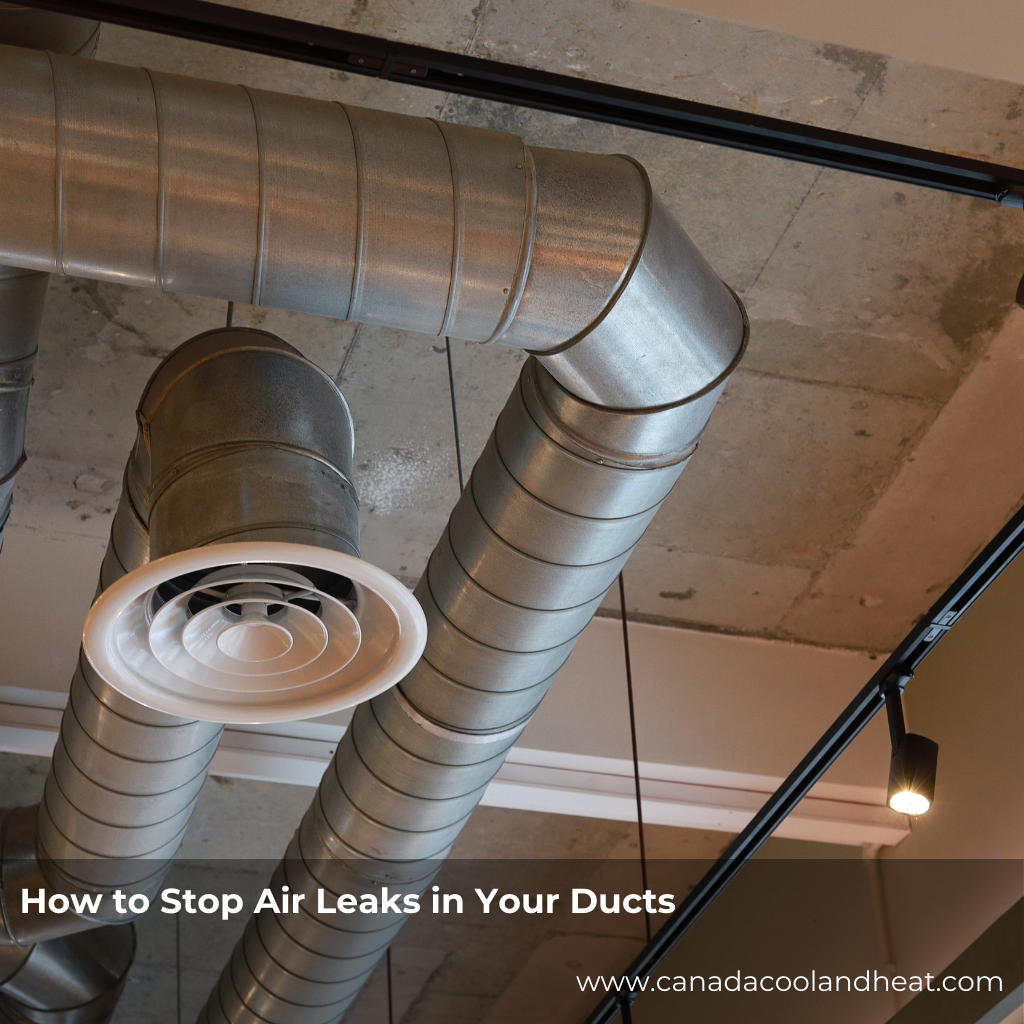
- Ducting: Short, straight, smooth metal ducts with minimal elbows
Should You Run the HVAC Fan 24/7?
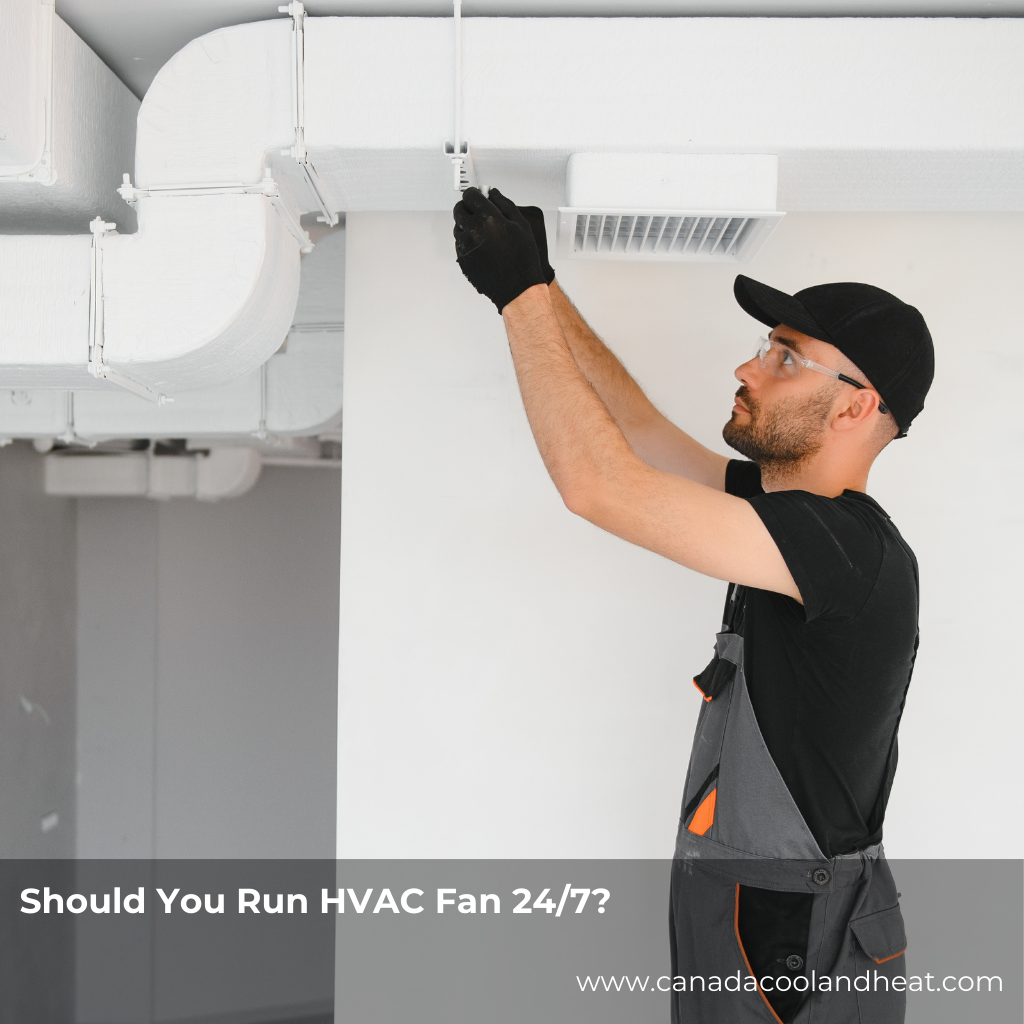
Running the HVAC fan continuously can improve temperature mixing and filtration, but it is not a substitute for kitchen exhaust. In fact, using the HVAC fan during cooking can spread contaminants throughout the home if the range hood isn’t capturing them effectively.
Pros of continuous HVAC fan operation:
- More even temperatures between rooms
- Increased air filtration (with a quality filter)
- Reduced stagnant air zones
Cons to consider:
- Higher electricity use
- Increased wear on blower motors
- Potentially spreading cooking pollutants without source capture
Bottom line: Use the range hood during cooking. Run the HVAC fan continuously only if your system is designed for it and paired with adequate filtration.
How Range Hoods Impact HVAC Balance
Pressure imbalances explained
Every exhaust device removes air from the home. When a range hood runs—especially a high‑capacity model—it can depressurize the kitchen and adjacent spaces. If makeup air isn’t provided, the home pulls replacement air from unintended locations.
Common side effects include:
- Cold or hot drafts
- Back‑drafting of fireplaces or water heaters
- Reduced efficiency of the HVAC system
- Whistling doors or windows
This is a critical consideration in vent hood HVAC kitchens, where multiple exhaust devices may run simultaneously.
Makeup air requirements
Many building codes require makeup air for range hoods rated above 400 CFM. Makeup air systems introduce tempered outdoor air to replace what’s exhausted, maintaining pressure balance and comfort.
Options include:
- Dedicated makeup air units tied to the hood
- Interlocked HVAC dampers that open when the hood runs
- Passive inlets (less precise, climate‑dependent)
Integrating makeup air with the HVAC system helps prevent energy loss and pressure problems.
Sizing Guidelines for Kitchen Range Hoods
Determining the right CFM
Range hood capacity is measured in cubic feet per minute (CFM). Oversizing wastes energy and increases makeup air needs; undersizing fails to capture pollutants.
General sizing rules:
- Electric cooktops: 100 CFM per linear foot of cooking surface
- Gas cooktops: 100–150 CFM per 10,000 BTUs of burner output
- Professional‑style ranges: Often 600–1,200 CFM (with makeup air)
Hood width and depth
- Width should be equal to or wider than the cooktop (ideally 3–6 inches wider)
- Deeper hoods improve capture, especially for front burners
Duct sizing and layout
- Match duct diameter to hood outlet (do not reduce)
- Use smooth, rigid metal ducting
- Keep runs short with minimal elbows
Proper duct design is as important as CFM for real‑world performance.
Integrating Kitchen Ventilation With HVAC Systems
For best results, kitchen ventilation should be planned alongside HVAC design—not as an afterthought.
Best practices include:
- Interlocking the range hood with makeup air and HVAC controls
- Using variable‑speed hoods to match cooking intensity
- Upgrading HVAC filtration if the fan runs continuously
- Commissioning the system to verify airflow and pressure balance
This holistic approach ensures comfort, efficiency, and indoor air quality.
Conclusion
Running your HVAC fan 24/7 can help with air mixing, but it won’t replace proper kitchen exhaust. Effective range hoods, correctly sized and balanced with makeup air, are essential for healthy vent hood HVAC kitchens. By focusing on source capture, pressure balance, and smart sizing, homeowners can enjoy cleaner air, better comfort, and more efficient HVAC performance. If you’re planning a remodel or upgrading equipment, consult an HVAC professional to ensure your kitchen ventilation works in harmony with the rest of your system.
Frequently Asked Questions
1. Is a recirculating range hood enough for most kitchens?
Recirculating hoods help with odors but do not remove moisture or combustion gases. Vented hoods are strongly recommended.
2. Does a higher CFM always mean better performance?
No. Capture efficiency, hood design, and ducting often matter more than raw CFM.
3. When is makeup air required for a range hood?
Typically when the hood exceeds 400 CFM, depending on local codes and home tightness.
4. Can a range hood affect my furnace or water heater?
Yes. Strong exhaust can back‑draft naturally vented appliances if makeup air isn’t provided.
5. Should I run the HVAC fan while cooking?
Use the range hood first. The HVAC fan can run if you want air mixing, but it shouldn’t replace source ventilation.
6. How loud should a good range hood be?
Look for sones ratings. Under 3 sones on normal speed is considered quiet.
7. Are downdraft systems effective?
They are generally less effective than overhead hoods, especially for gas cooking.