High humidity can reduce your air conditioner’s efficiency because it forces the system to work harder to remove excess moisture from the air. This not only increases energy consumption but can also lead to less effective cooling. Managing indoor moisture helps maintain AC efficiency and keeps your home comfortable.
Why High Humidity Affects AC Efficiency
Air conditioners are designed to cool the air by removing heat and moisture. When humidity levels are high, the AC must run longer cycles to remove this extra moisture, which can strain the system.
- Increased Energy Use: More energy is needed to run the AC for longer periods in humid conditions.
- Reduced Comfort: High humidity can make rooms feel warmer than they are, forcing the AC to work harder.
- Wear and Tear: Prolonged operation can lead to quicker wear and tear on system components.

Signs Humidity is Affecting Your AC
Recognizing the signs of high humidity in your home can help you address the issue before it taxes your AC system excessively.
- Clammy Air: The indoor air feels damp or sticky.
- Mold and Mildew: You’ll notice growth in corners or on ceilings.
- Foggy Windows: Condensation on windows is a clear sign.
Ways to Manage Indoor Humidity
Managing indoor humidity not only improves AC efficiency but also boosts comfort. Here are some practical steps:
Use a Dehumidifier
A dehumidifier can complement your AC by removing excess moisture, allowing the air conditioner to focus on cooling.
Ventilate Properly
Good ventilation helps reduce humidity. Open windows or use exhaust fans in areas like kitchens and bathrooms.
Seal Leaks
Check for and seal any leaks in your home that might allow humid outside air to enter.
How to Measure Humidity Levels
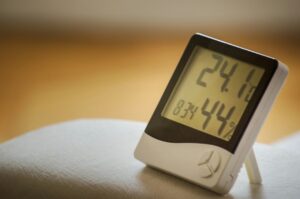
Using a hygrometer, you can measure your indoor humidity levels. Aim for a range between 30% and 50% for optimal comfort and efficiency.
Regularly monitoring humidity helps you make informed decisions about when to use dehumidifiers or adjust ventilation.
High humidity forces your AC to work harder, increasing energy use and reducing efficiency.
When to Call a Professional
If managing humidity seems overwhelming or your AC struggles despite your best efforts, it might be time to call in a professional. Find a contractor in your area who can assess and address any underlying issues.
Practical Steps to Take Today
To start, check your home for signs of high humidity and consider using a dehumidifier. Seal any noticeable leaks and ensure proper ventilation. Regular maintenance of your AC system can also prevent efficiency issues related to humidity.
Frequently asked questions
What is the ideal indoor humidity level for AC efficiency?
The ideal indoor humidity level for air conditioning efficiency is between 30% and 50%. This range helps in maintaining comfort and reducing energy use.
Can high humidity damage my air conditioner?
High humidity can strain an air conditioner by forcing it to run longer cycles, which may lead to wear and tear over time. This can increase repair needs and reduce the lifespan of the unit.
How can I tell if my home's humidity is too high?
Signs of high humidity include feeling sticky air, seeing condensation on windows, or noticing mold and mildew growth. A hygrometer can also be used to measure humidity levels.
What should I do if my AC isn't effectively removing humidity?
If your air conditioner isn't effectively removing humidity, consider using a dehumidifier or ensuring proper ventilation. If the problem persists, consult a professional for a system check.
Do all air conditioners dehumidify the air?
Most air conditioners have a dehumidifying effect, but they are primarily designed to cool. In areas with high humidity, additional dehumidification might be necessary.